Love Makes a Family
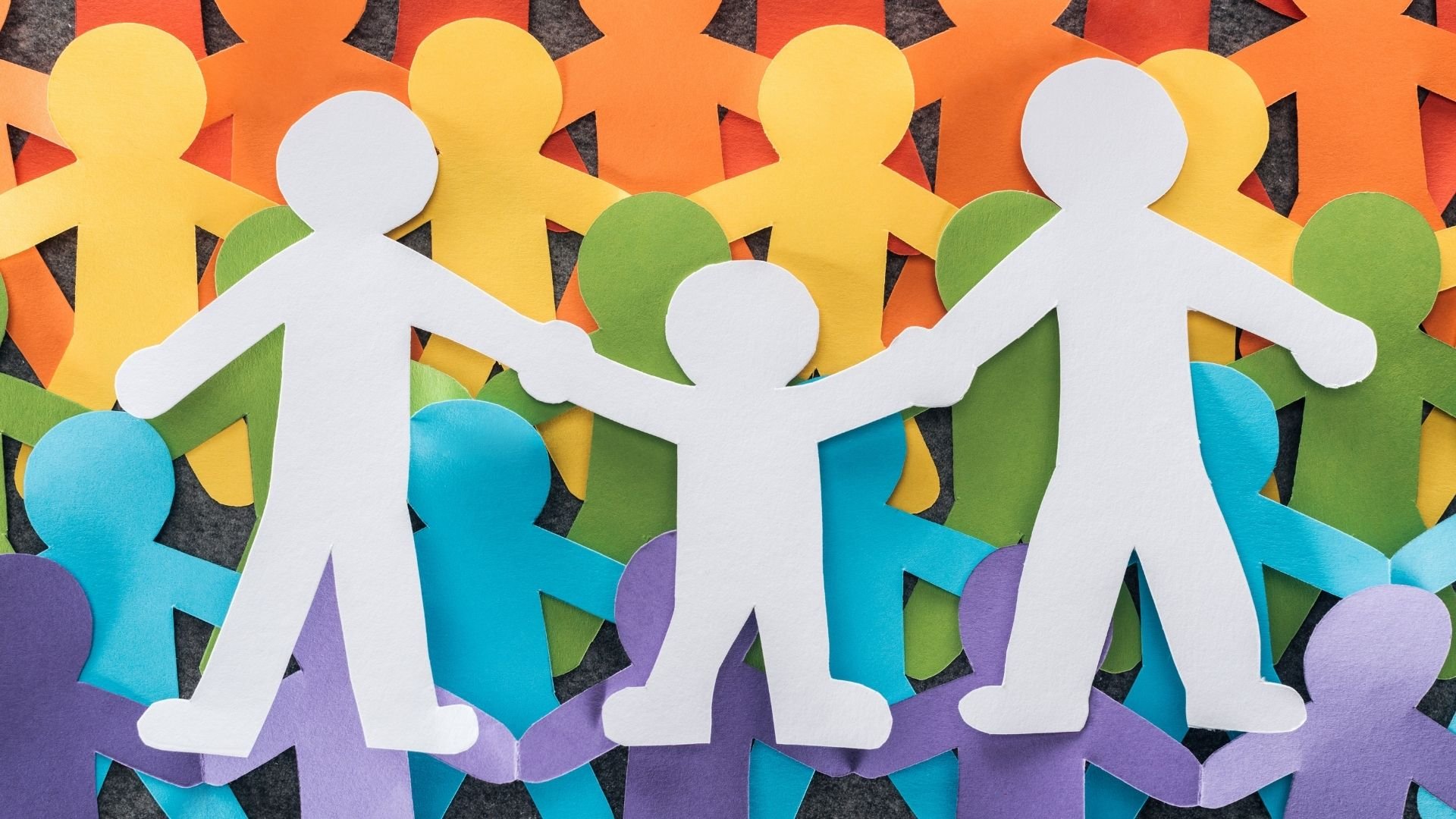
Supporting LGBTQIA+ Families This Pride Month (and Year Round)
June is Pride Month, a time to honor the rich history of LGBTQIA+ folks and reflect on the ways we support the LGBTQIA+ community. At OCOF, we believe that individuals—and families—thrive when they have meaningful, healthy connections with others within their environment. For some families, developing these meaningful, healthy connections in the local community happens with relative ease. For others, and especially for LGBTQIA+ families, the process of developing meaningful, healthy community connections is more challenging—but no less essential to family success and thriving.
What Makes a Family?
Many of us think of families in terms of biological ties, household living arrangements, or legal structures. For some, “family” is narrowly defined—the people who live together in one household with shared resources and commitments to one another. For others, “family” is broad and includes individuals both within and outside of the household who provide love, care, and support to one another. No matter how you define “family,” all families are more successful and individuals within the family thrive when the family is connected to the broader community in positive, meaningful ways. Families who feel represented and embraced by the community members and social systems around them are able to forge these meaningful connections with fewer barriers and less risk of experiencing harmful rejection or mistreatment.
What is an LGBTQIA+ family? Like families in general, LGBTQIA+ families are not all the same. LGBTQIA+ is an acronym that stands for lesbian, gay, bisexual, transgender, queer/questioning, intersex and asexual, “plus” the broad spectrum of other sexual orientations, gender identities, and sex characteristics that are present across the human experience. LGBTQIA+ families may be same-sex couples and their children, but could also be parents and their LGBTQIA+ child or children, “chosen family” (individuals who form a network of supports for LGBTQIA+ folks who may not have positive relationships with their biological family for a variety of reasons), multigenerational households, single-parent families, blended families, etc. Any family with one or more members who identify with the LGBTQIA+ community may consider themselves to be an LGBTQIA+ family.
One experience that many LGBTQIA+ families have in common is facing barriers and challenges when trying to form meaningful social connections within their community. In geographic regions where the LGBTQIA+ community is underrepresented or experiences significant discrimination or erasure, building connections with other families can be a real challenge. Safety concerns may mean that LGBTQIA+ families are less visible to one another, making forming relationships with families with shared experiences difficult. In rural communities, there may not be any other LGBTQIA+ families nearby to spend time and share experiences with. LGBTQIA+ families may feel unsure or unsafe about developing close relationships with or participating in community organizations or events alongside non-LGBTQIA+ community members.
Supporting LGBTQIA+ Families in Our Community
Whether we realize it or not, LGBTQIA+ families are part of our local communities. They live in our neighborhoods, they shop in our grocery stores, they attend our schools, and they should feel embraced just as all families should. So what can individuals and communities do to be more welcoming and supportive of LGBTQIA+ individuals and families?
Learn about LGBTQIA+ history and current community needs.
Each of us is in a different stage in learning about LGBTQIA+ history and recognizing current community needs. There are many great (free!) resources available for those who want to broaden and deepen their understanding of LGBTQIA+ history and the needs of LGBTQIA+ families around us (and we’ve shared some at the end of this blog post to get you started). Talking with community members, local leaders and organizations who support LGBTQIA+ folks in our community can also be a great way to understand the particular needs of LGBTQIA+ families in your area and ways to get involved.
Pride Month challenge: Engage with one online article, book, or podcast about LGBTQIA+ families and reflect on what you’ve learned by journaling or talking with a loved one.
Advocate for LGBTQIA+ representation in community spaces and resources.
Representation matters. Engaging with a community space and seeing families who look like yours represented in the art on the walls, the books on the shelves, the employees taking care of you conveys the message that you are welcome, wanted, and safe. For LGBTQIA+ families, this representation is can be rare or nonexistent. Advocacy from community members to increase open, visible representation of LGBTQIA+ families can go a long way to helping LGBTQIA+ families feel wanted, welcome, and safe to be more fully involved and connected in the local community.
Pride Month challenge: Visit a local community space and look for LGBTQIA+ representation, then identify one small change that space could make to help LGBTQIA+ families feel more welcome—then consider making that suggestion to a manager or local leader.
Develop relationships with LGBTQIA+ folks in your community.
LGBTQIA+ families are everywhere, even when they aren’t very visible in your community. Making efforts to develop positive relationships with LGBTQIA+ individuals and families in your area can help to create a sense of belonging for LGBTQIA+ folks and increase your own family’s feelings of connection in the community, too. Nurturing relationships can be pathways to healing and developing the connections that support a thriving family and community.
Pride Month challenge: Learn about the events and spaces in your community that are known for being welcoming to LGBTQIA+ families and bring your family to participate and meet new people—visiting these places or participating in events more frequently may help you develop meaningful relationships with LGBTQIA+ families near you.
Support local organizations that serve LGBTQIA+ folks.
Is there a local non-profit that provides resources or care to LGBTQIA+ folks? A place of worship that is welcoming and affirming? A community space with excellent representation? Finding ways to support the positive work that’s already being done in your local community to build a sense of belonging and fill the critical gaps for LGBTQIA+ families can be a meaningful and impactful way to support LGBTQIA+ families in your area.
Pride Month challenge: Identify one local organization or group who supports LGBTQIA+ folks in your community and ask how you can get involved—consider donating, volunteering, or helping to share information about the services they provide.
A Community for Every Family
Our goal is to support our local systems to foster a sense of community connection for every family, LGBTQIA+ families included. LGBTQIA+ families often face significant barriers and challenges to developing a sense of belonging within their local communities. It is our shared responsibility to create spaces and opportunities for LGBTQIA+ families to feel welcomed, wanted, and celebrated alongside all of the other wonderful, diverse families that make up the Heart of Texas region.
Resources
If you are interested in learning more about LGBTQIA+ history and experiences, Pride Month, or ways to support LGBTQIA+ families in your local community, we invite you to check out these resources.
Articles & blogs: Why Pride and Its History Matters for Your Family (Strong Family Alliance); Fathernetics – The Energy of Fatherhood in Motion: Creativity, Advocacy, and Family (Gay Parent Magazine)
Children’s books: A Family Is a Family Is a Family by Sara O’Leary; The Family Book by Todd Parr; Love Makes a Family by Sophie Beer; And Tango Makes Three by Justin Richardson & Peter Parnell; Stella Brings the Family by Miriam B. Schiffer; Mommy, Mama, and Me or Daddy, Papa, and Me by Lesléa Newman
Podcasts: The Queer Family Podcast; Some Families Podcast; Rose and Rosie: Parental Guidance
Organizations: Waco Pride Network; Equality Texas; Transgender Education Network of Texas